

About
One person. No team, no investors, no advisory board.
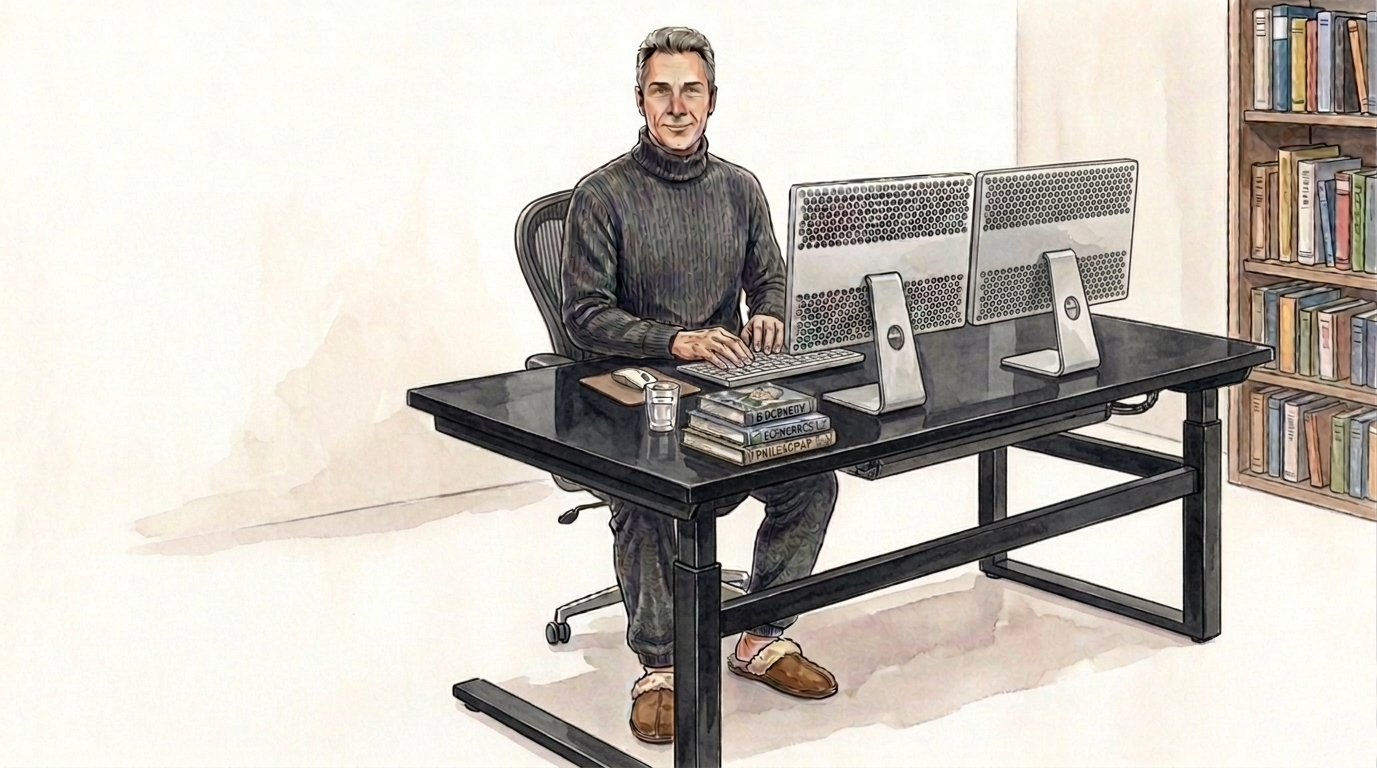
My name is Rasty Turek and I'm the person behind Vaultaire.
One engineer, one codebase, one set of architectural decisions that answer to nobody except the people who use this app. That's the whole org chart.
Why one person matters
When you build a privacy tool with a team, you create a surface area problem. Every engineer who touches the codebase has access to the architecture. Every investor who funds the company has an opinion about monetization. Every board member has a fiduciary duty that might conflict with your right to keep your files private.
Vaultaire has none of that. One person wrote every line of code, designed every screen, and made every architectural decision. There is no second key holder. There is no one to subpoena who might know something useful. The security architecture — AES-256-GCM, local-only key derivation, zero-knowledge design — uses the same encryption standards trusted by governments and financial institutions, applied without compromise because there was no committee to water them down.
Background
I started my career as an engineer at Google. After that, I built a few companies — each one focused on scale, data infrastructure, and systems that handle millions of users. Security was always a thread running through that work. When you operate at scale, you learn fast that the architecture either protects people by default or it doesn't protect them at all.
Along the way I built companies in the security and content-attribution space, working on problems where data integrity and access control aren't features — they're the product. That background shaped how I think about encryption, key management, and what it means for software to be genuinely zero-knowledge.
More recently I've been focused on AI tooling — agents, eval systems, and developer workflows across iOS, macOS, and the web. The common thread is the same: build things that ship real value without requiring people to hand over their data to use them.
What Vaultaire is
Vaultaire is where my security background and my interest in cryptographic design meet. I wanted to build an encrypted vault that does what most vault apps only pretend to do — actually encrypt your files, not just hide them behind a PIN screen. It uses AES-256-GCM with keys derived from a pattern you draw. I can't see your files. I can't recover your password. I can't comply with a subpoena for your data because I don't have your data.
The duress vault — where drawing a specific pattern under coercion silently destroys your other vaults — exists because I thought about the people who need this most. Journalists, activists, abuse survivors, travelers crossing hostile borders. These aren't theoretical users. They're the reason every architectural decision bends toward plausible deniability.
How I build
I obsess over the details most people skip. Binary size, because bloat is a signal of carelessness. Typography, because visual precision reflects engineering precision. Context efficiency, because building with AI means every wasted token is a wasted decision.
I'm wrong a lot, and I prefer it that way — being wrong quickly is how you converge on something worth shipping.
Vaultaire has no analytics, no tracking pixels, no third-party SDKs, no account system. The app doesn't know who you are. Neither do I. That's the point.
If something is broken, email [email protected]. I read everything.